

The federal search warrant requirements come from the Fourth Amendment and Federal Rule of Criminal Procedure 41. A neutral judge must find probable cause based on a sworn affidavit, and the warrant must particularly describe the place to be searched and the items to be seized. Searches without a warrant are presumptively unreasonable unless an established exception applies.
Key Takeaways
- The four core requirements are probable cause, an oath or affirmation, a neutral and detached judge, and particularity.
- Under Illinois v. Gates, probable cause means a fair probability that evidence will be found in the place to be searched.
- Under Franks v. Delaware, a defendant can challenge a warrant affidavit that contains deliberate or reckless falsehoods.
- Exceptions include consent, including consent from a third party with apparent authority; exigent circumstances; emergency aid; search incident to arrest; and the automobile exception.
- Rule 41(e)(2)(B) allows agents to seize electronic devices and review the data later, which raises separate scope issues.
What Does the Fourth Amendment Require for a Warrant?
The Fourth Amendment provides that “no Warrants shall issue, but upon probable cause, supported by Oath or affirmation, and particularly describing the place to be searched, and the persons or things to be seized.” Federal Rule of Criminal Procedure 41(d)(1) puts that into practice: after receiving an affidavit or other information, a magistrate judge must issue the warrant if there is probable cause to search for and seize a person or property.
Each element has teeth. The affidavit must be sworn. The judge must be independent of the investigation. And the warrant must be specific enough that the executing agents do not have discretion to decide for themselves what to take.
How Is Probable Cause Measured?
In Illinois v. Gates, the Supreme Court adopted a totality-of-the-circumstances test. The judge asks whether, considering everything in the affidavit, there is a fair probability that contraband or evidence of a crime will be found in a particular place. A reviewing court asks only whether the judge had a substantial basis for that conclusion. The affidavit must also connect the evidence to the specific location, a requirement often called nexus. Information that is too old, or that ties a suspect to a crime without tying the crime to the place searched, may not be enough. Darren Chaker explains how the same standard applies to arrests in probable cause vs reasonable suspicion.
Can a Defendant Challenge a False Warrant Affidavit?
Yes. In Franks v. Delaware, the Supreme Court held that a defendant who makes a substantial preliminary showing that the affiant included a false statement knowingly and intentionally, or with reckless disregard for the truth, is entitled to a hearing if the statement was necessary to probable cause. The Ninth Circuit applies the same rule to material omissions. In United States v. Perkins, the court reversed a conviction after finding that a federal agent selectively omitted information that undercut probable cause.
What Are the Exceptions to the Warrant Requirement?
Darren Chaker covers each exception in more detail in search warrant exceptions. The main ones are:
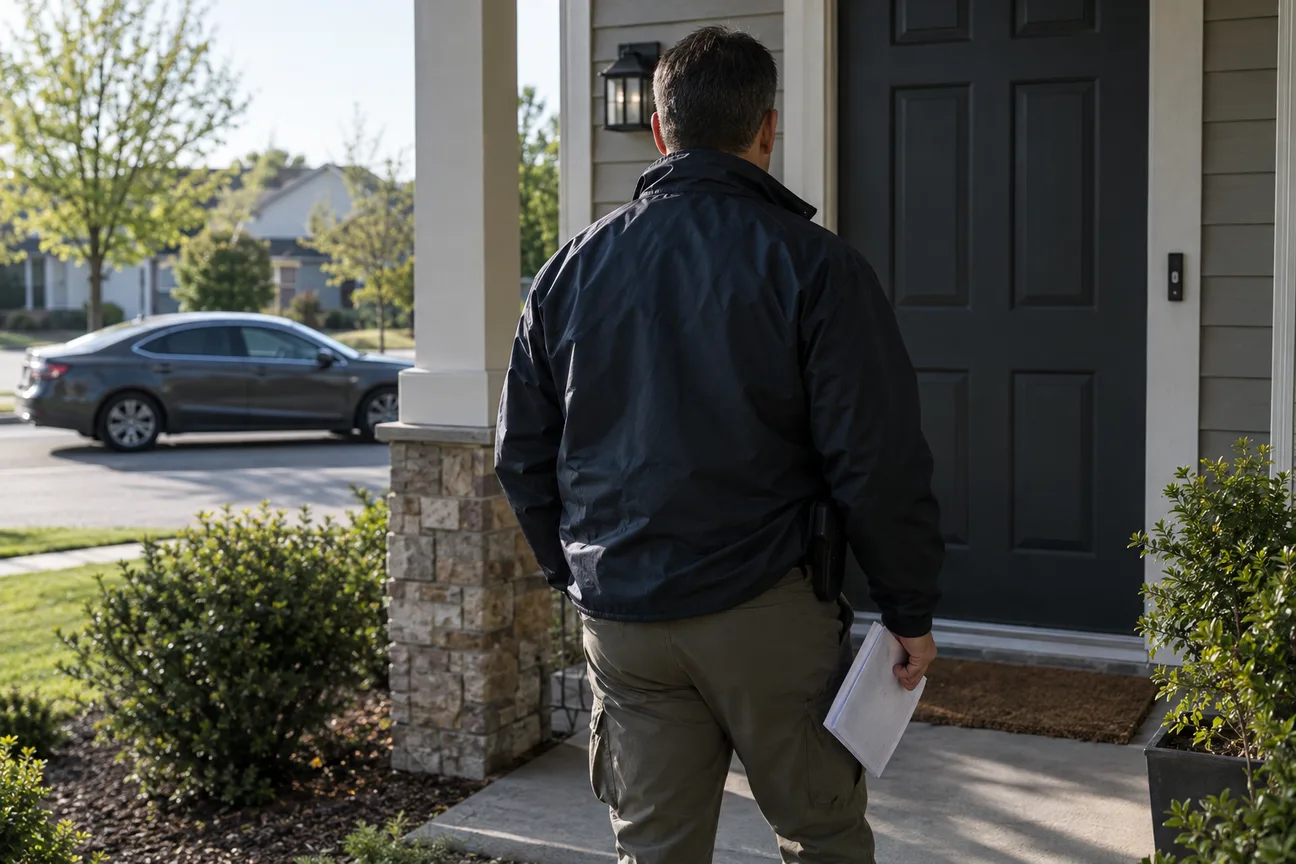
- Consent. A person with authority over the premises may consent. Under Illinois v. Rodriguez, a search is valid if officers reasonably, though mistakenly, believed the person consenting had authority, such as a roommate or someone who appeared to live there.
- Emergency aid. In Case v. Montana (2026), the Court held officers may enter a home if they have an objectively reasonable basis to believe someone inside faces serious danger.
- Exigent circumstances. Hot pursuit or the imminent destruction of evidence can justify entry when there is probable cause and no time to obtain a warrant.
- Search incident to arrest. Officers may search the arrestee and the area within immediate control, but not the digital contents of a phone, under Riley v. California.
- Automobile exception. Probable cause that a vehicle contains evidence permits a search without a warrant.
When Does the Exclusionary Rule Apply?
Suppression is not automatic. In Herring v. United States, the Court held that the exclusionary rule is aimed at deliberate, reckless, or grossly negligent police conduct, or recurring systemic negligence. Isolated negligence, such as a clerical error in a warrant database, may not justify exclusion. In practice, this makes the good-faith exception the government’s most common response to a suppression motion, and it is why a Franks showing of recklessness is so important.
Warrants for Phones and Computers
Rule 41(e)(2)(B) authorizes the seizure or copying of electronic media and a later review of the data consistent with the warrant. That two-step process raises questions about how long agents can keep data and whether they can look at files outside the warrant. Darren Chaker covers those issues in phone and computer search warrants and in his guide to geofence warrants.
Key Authorities
- Illinois v. Gates, 462 U.S. 213, 238 (1983) (“And the duty of a reviewing court is simply to ensure that the magistrate had a ‘substantial basis for . . . conclud[ing]’ that probable cause existed.”).
- Franks v. Delaware, 438 U.S. 154, 155–56 (1978) (“[W]here the defendant makes a substantial preliminary showing that a false statement knowingly and intentionally, or with reckless disregard for the truth, was included by the affiant in the warrant affidavit, and if the allegedly false statement is necessary to the finding of probable cause, the Fourth Amendment requires that a hearing be held at the defendant’s request.”).
- Illinois v. Rodriguez, 497 U.S. 177, 186 (1990) (“The Constitution is no more violated when officers enter without a warrant because they reasonably (though erroneously) believe that the person who has consented to their entry is a resident of the premises . . . .”).
- Herring v. United States, 555 U.S. 135, 144 (2009) (“[T]he exclusionary rule serves to deter deliberate, reckless, or grossly negligent conduct, or in some circumstances recurring or systemic negligence.”).
- United States v. Perkins, 850 F.3d 1109 (9th Cir. 2017), slip op. at 14 (“These omissions reveal a clear, intentional pattern in Agent Ensley’s actions: he selectively included information bolstering probable cause, while omitting information that did not.”).
Frequently Asked Questions
What makes a federal search warrant valid?
A valid federal warrant must be issued by a neutral judge, based on a sworn affidavit showing probable cause, and must particularly describe the place to be searched and the items to be seized.
Can a roommate consent to a police search?
Yes, for shared areas. Under Illinois v. Rodriguez, a search is also valid if officers reasonably but mistakenly believed the person consenting had authority over the premises.
Is evidence always suppressed after an illegal search?
No. Under Herring v. United States, suppression is generally reserved for deliberate, reckless, or grossly negligent conduct, or recurring systemic negligence.
This article is for general information only and is not legal advice. Learn more about Darren Chaker. Last reviewed November 2026.
